

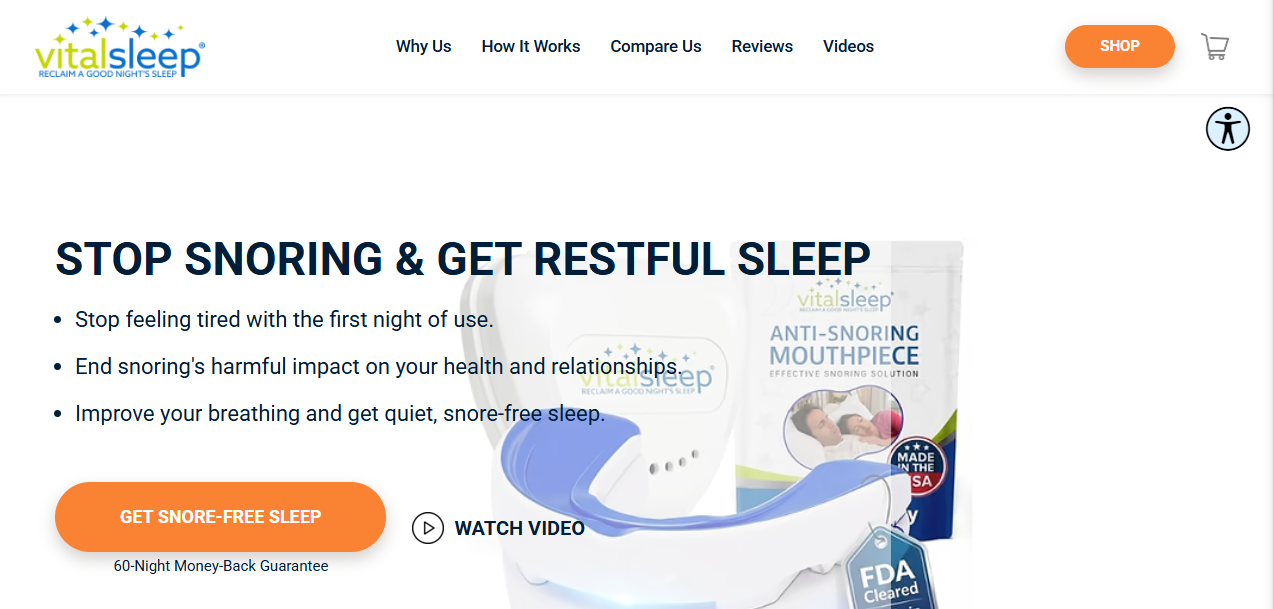
VitalSleep® is a leading provider of healthcare solutions focused on snoring and sleep quality. The brand runs an active email program across 22 unique campaigns, including high-value sequences like “Sleep Savings” and “Welcome to the Sleep VIP” welcome flows. From inside Klaviyo, the program looked healthy. Emails were going out. No hard bounces. Consistent volume.
An InboxEagle audit told a different story.
The Problem: Revenue Leaking Without a Single Warning Sign
The core finding was stark: 23.8% of VitalSleep®’s emails were being filtered directly into spam across the 26 emails analyzed. More than half of those reached the inbox (52.4%), but nearly one in four was disappearing before a subscriber ever saw it.
The brand had no visibility into this. Klaviyo’s dashboard reported delivery. It did not report where those delivered emails actually landed.
The audit identified three structural failures behind the numbers.
What the Audit Found
1. Provider-Specific Blackouts
The placement problem was not uniform. Gmail performance was stable across some campaigns. But the picture at other providers was far worse.
Yahoo: 50% spam placement. Every other email sent to a Yahoo subscriber was going straight to junk. For a brand whose audience spans multiple email providers, Yahoo placement at 50% spam means a material share of every campaign was functionally invisible.
AOL: 100% spam placement. Every email sent to an AOL address was landing in spam. Not most. All of them.
These provider-level breakdowns are not visible inside Klaviyo. They only surface when you have placement data at the provider level.
2. Full Shared IP Exposure
100% of VitalSleep®’s sending IPs were shared with other brands. One primary IP, 170.203.20.11, was being used by 787 other unknown senders simultaneously. When any of those co-tenants generate elevated complaint rates, hit spam traps, or send to stale lists, the shared IP reputation degrades for every sender on it.
VitalSleep® had no control over this exposure and no visibility into it until the audit surfaced the specific IPs and co-sender counts.
3. Authentication Gaps Across SPF, DKIM, and DMARC
The audit flagged warning-level indicators across all three authentication protocols. SPF, DKIM, and DMARC are the identity signals mailbox providers use to verify a sender is who they claim to be. Yahoo and AOL weight these signals heavily. Gaps in authentication directly contributed to the provider-specific spam placement rates the audit uncovered.
The Benchmark Gap
VitalSleep®’s overall deliverability score of 60/100 sat below the healthcare industry average of 60.7, placing them in the bottom tier of their peer group. The audit gave the team the specific data point needed to prioritise a deliverability cleanup rather than treat it as a future consideration.
The Recovery Strategy
With the InboxEagle audit data in hand, VitalSleep® built a recovery roadmap across four areas.
Authentication Hardening
Moving SPF, DKIM, and DMARC from warning to passing is the foundational step. For Yahoo and AOL specifically, authentication failures are a direct trigger for spam classification. Fixing these protocols does not require any changes to sending volume or content. It is a technical fix that produces measurable placement improvement, typically within 24-72 hours of DNS propagation.
Shared IP Mitigation
With 100% shared IP exposure and one IP carrying 787 co-senders, the team began identifying which specific IPs were tied to the worst placement outcomes and charting a migration toward more isolated sending paths. Reducing co-sender count on the primary IPs directly reduces reputation volatility from external sending behaviour.
Subject Line and Content Calibration
The audit allowed VitalSleep® to compare placement outcomes across specific subject lines. High-urgency copy like “60-sec bedtime ‘throat trick’” was analysed against standard sends to isolate whether promotional language patterns were contributing to filter triggers at Yahoo and AOL. The goal was not to strip promotional language, but to understand which patterns were crossing provider-specific thresholds.
Provider-Specific Re-warming
With Yahoo at 50% spam and AOL at 100%, both providers required targeted re-engagement strategies to rebuild placement trust. This meant sending to the most engaged segments within each provider’s subscriber pool first, establishing positive engagement signals before expanding to the broader audience at those providers.
The 23.8% of VitalSleep®’s audience that was landing in spam was not a content problem or a frequency problem. It was an infrastructure and authentication problem that Klaviyo’s dashboard had no way to surface. The audit made it visible. The roadmap makes it fixable.
Sound familiar?
Your Klaviyo dashboard won't show you this. An InboxEagle audit will.
Every brand in this case study thought their emails were being delivered. They were. Just not to the inbox. Find out exactly where yours are landing.